
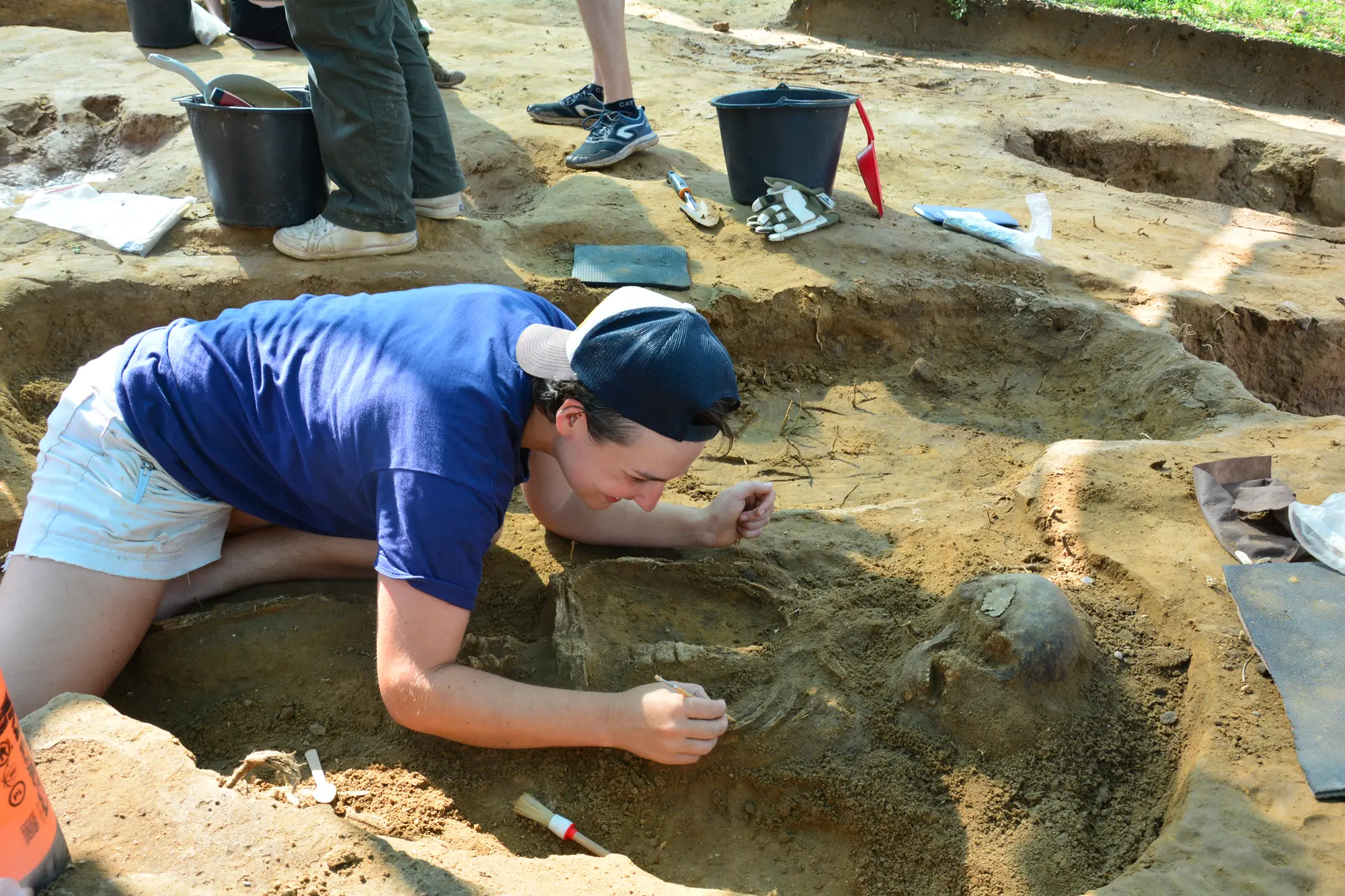
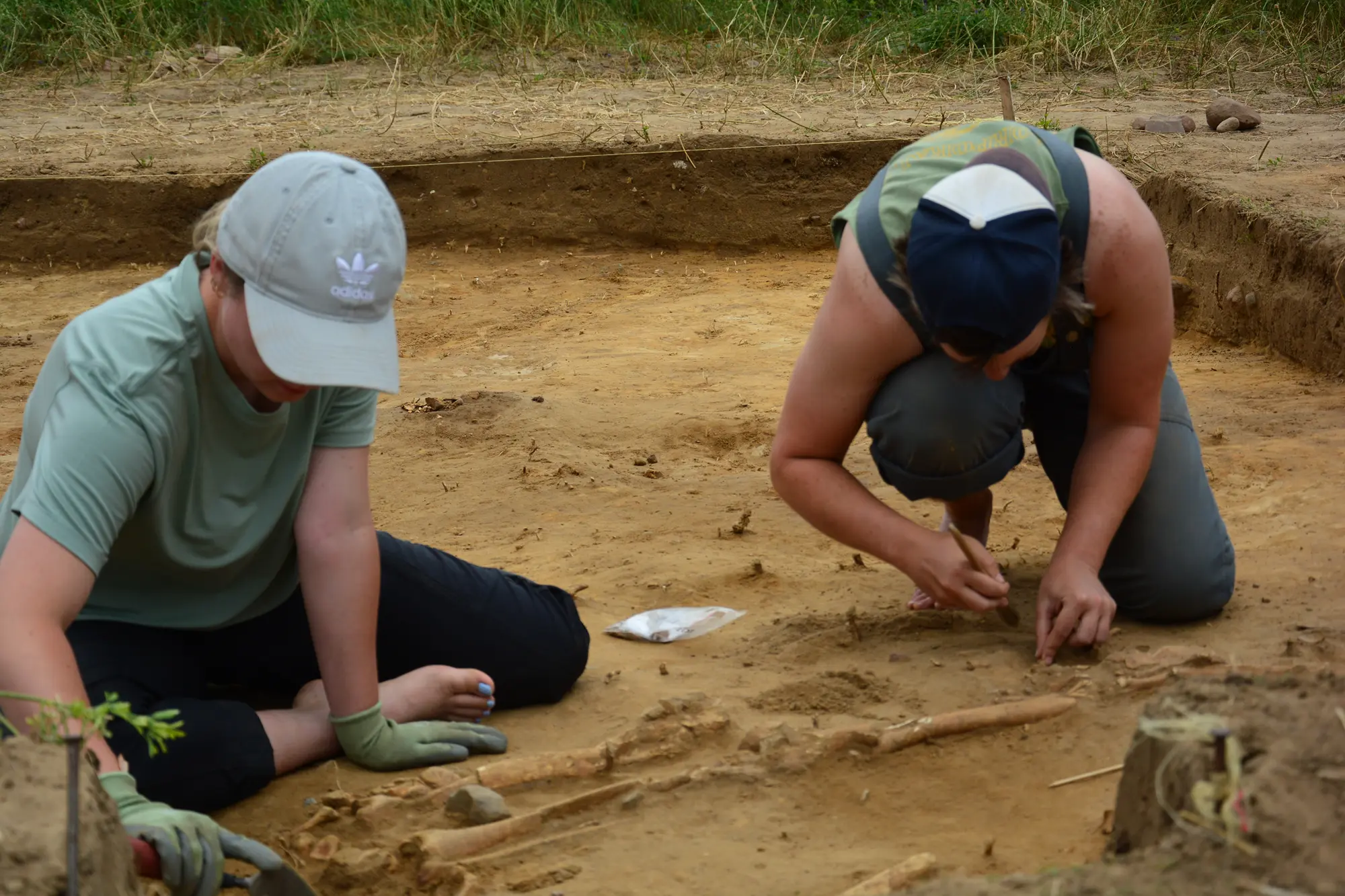
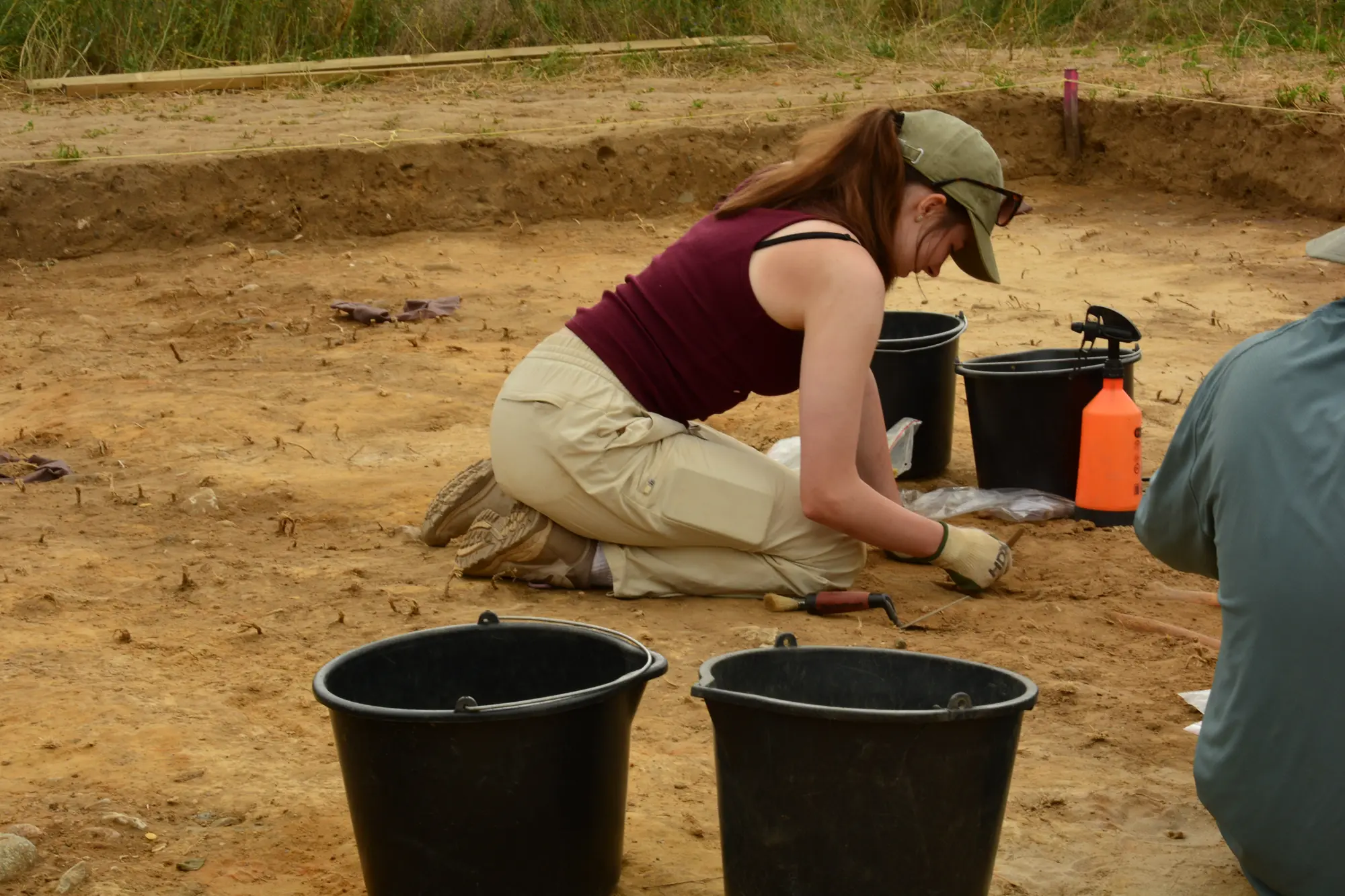
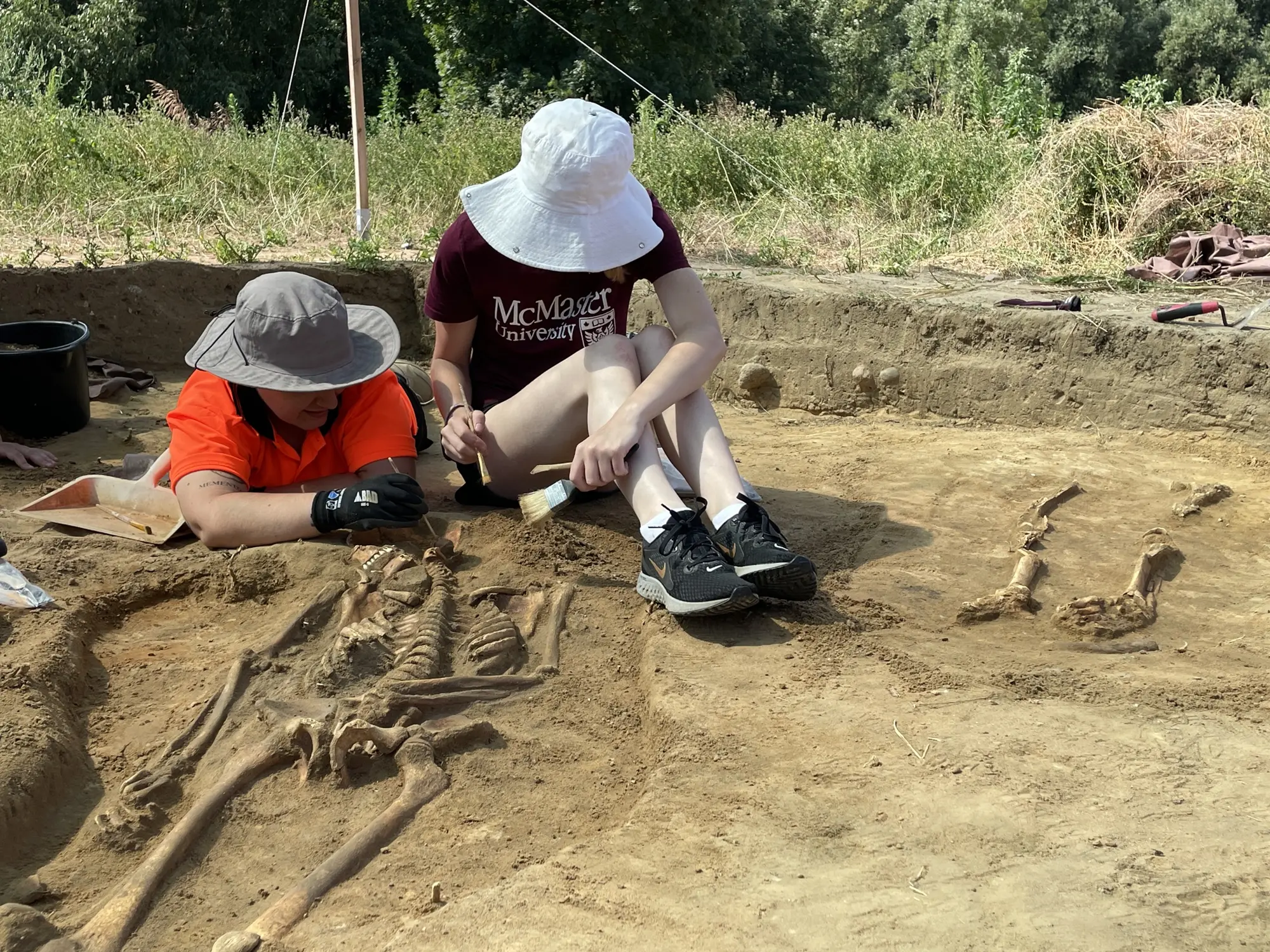
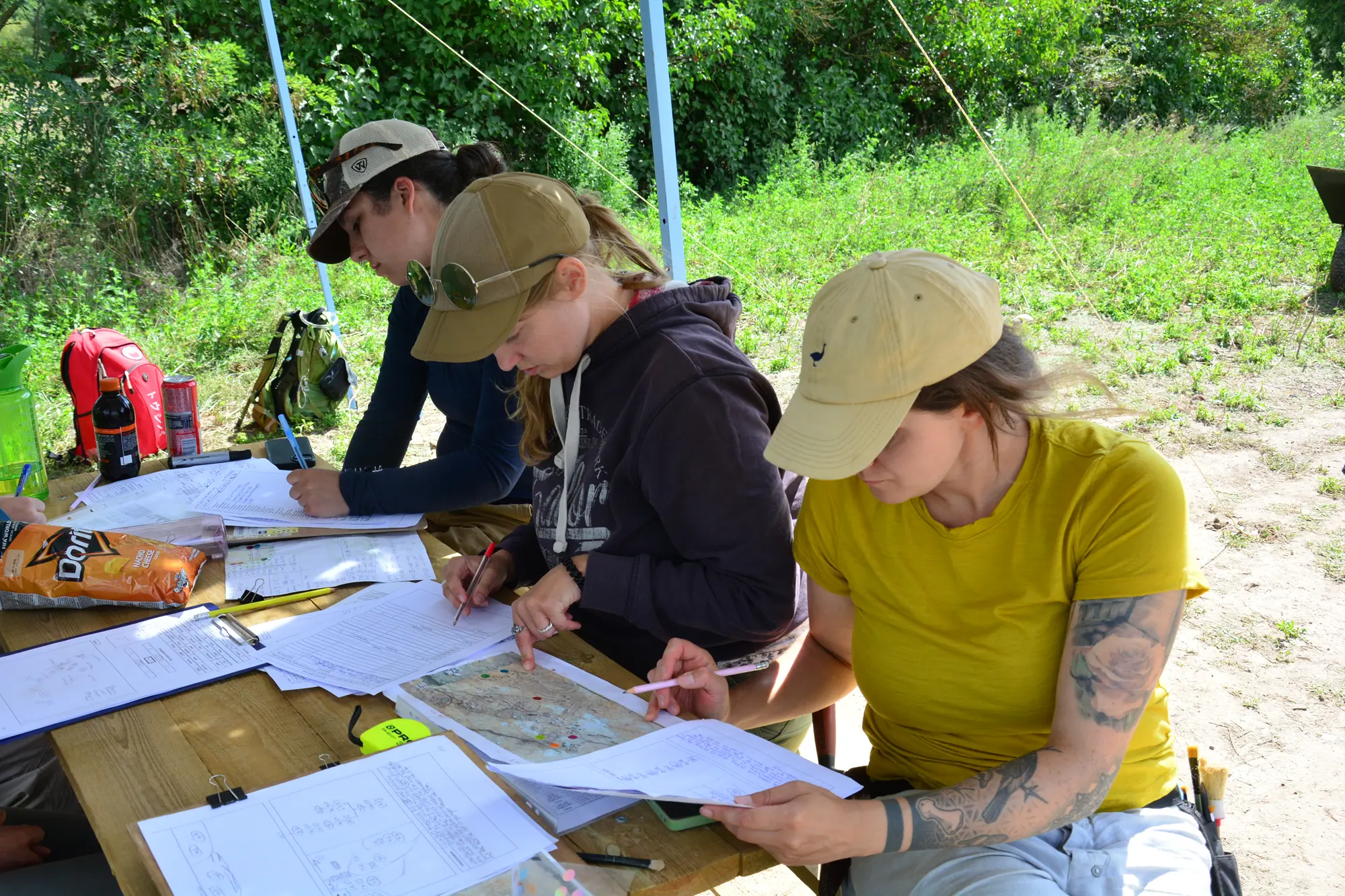
The Mortuary Archaeology Field School provides a unique opportunity for archaeology and bioarchaeology students, as well as anyone interested in mortuary archeology, osteoarchaeology or forenscic sciences to learn recovery and documentation techniques through excavating archaeological human remains and artefacts. We welcome students at all levels of experience.
Jankowo is a small village located 10 km east of Gniezno, the nearest county town, in the province of Wielkopolska. Nestled in a charming landscape, the village attracts many tourists and hikers, but few are aware of its historical and archaeological heritage. Jankowo reached its heyday in the Middle Ages, during the 14th and 15th centuries, when settlements concentrated around two prominent hills. A knights’ manor house was built, while a parish church and cemetery were located on the other. Today, the archaeological site consists of two interconnected areas: the remains of the parish church and cemetery, and an extensive manor complex. Together, they form a unique settlement site, an example of a small feudal defensive structure with an adjacent local religious center.
Archaeological research conducted at the manor site in the 1990s yielded spectacular discoveries. In addition to the remains of the manor walls, archaeologists uncovered a vast collection of artifacts, including thousands of fragments of ceramic vessels, glass objects, iron tools and fittings, and coins ranging from 15th-century denarii to 17th-century shillings. On the neighboring hill, researchers uncovered the parish cemetery along with the remains of the church. Excavations revealed more than forty burials oriented east-west, in accordance with Christian funerary rites. The deceased were laid in simple coffins, sometimes surrounded by stone frames. The absence of richly furnished graves reflects the rural character of the parish community. The site still holds enormous potential for further research and discovery.
The Mortuary Archaeology Field School at Jankowo Dolne welcomes all students wishing to gain practical experience in excavating human remains and other aspects of mortuary archaeology. The project aims to provide insight into the life of the rural community of farmers over a 500-year period, from the 14th to the 19th century. Current archaeological research seeks to identify the spatial organization of the cemetery and trace how it changed over the centuries, as well as to analyze the demographics and health of the population. Through archaeological excavation, we plan to collect data that will shed light on migration, dietary patterns, and markers of developmental stress. By combining multiple lines of evidence, we aim to understand the adaptive and biological responses of Jankowo’s non-elite, rural population to changes in the economic system and deteriorating climate conditions in early modern Poland.
This program is an intense but rewarding research-based learning experience providing hands-on training in the evaluation of historical human remains in an archaeological context. Upon completion of this course, you should be able to:
Through osteology instruction, students will learn to:
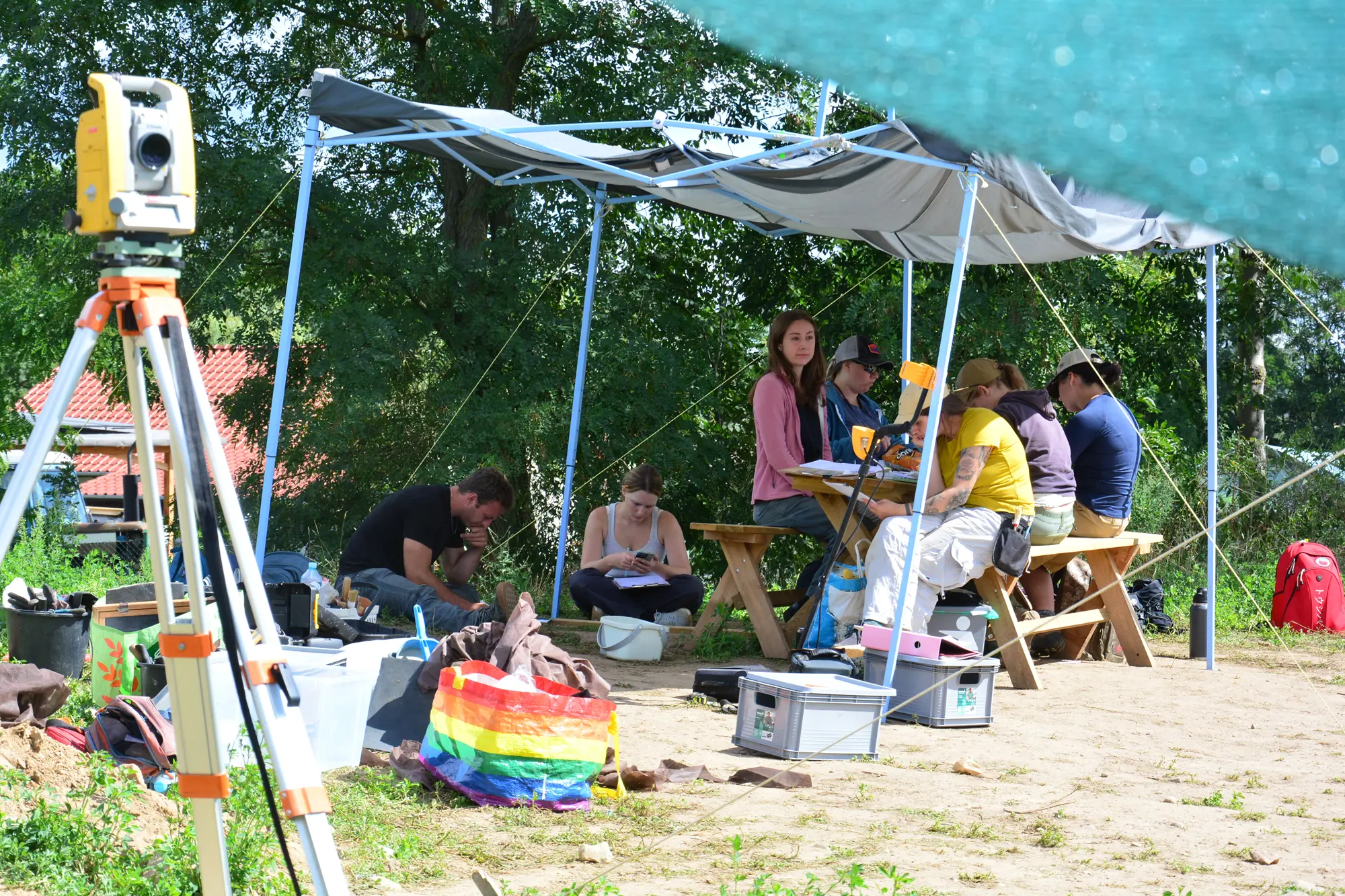
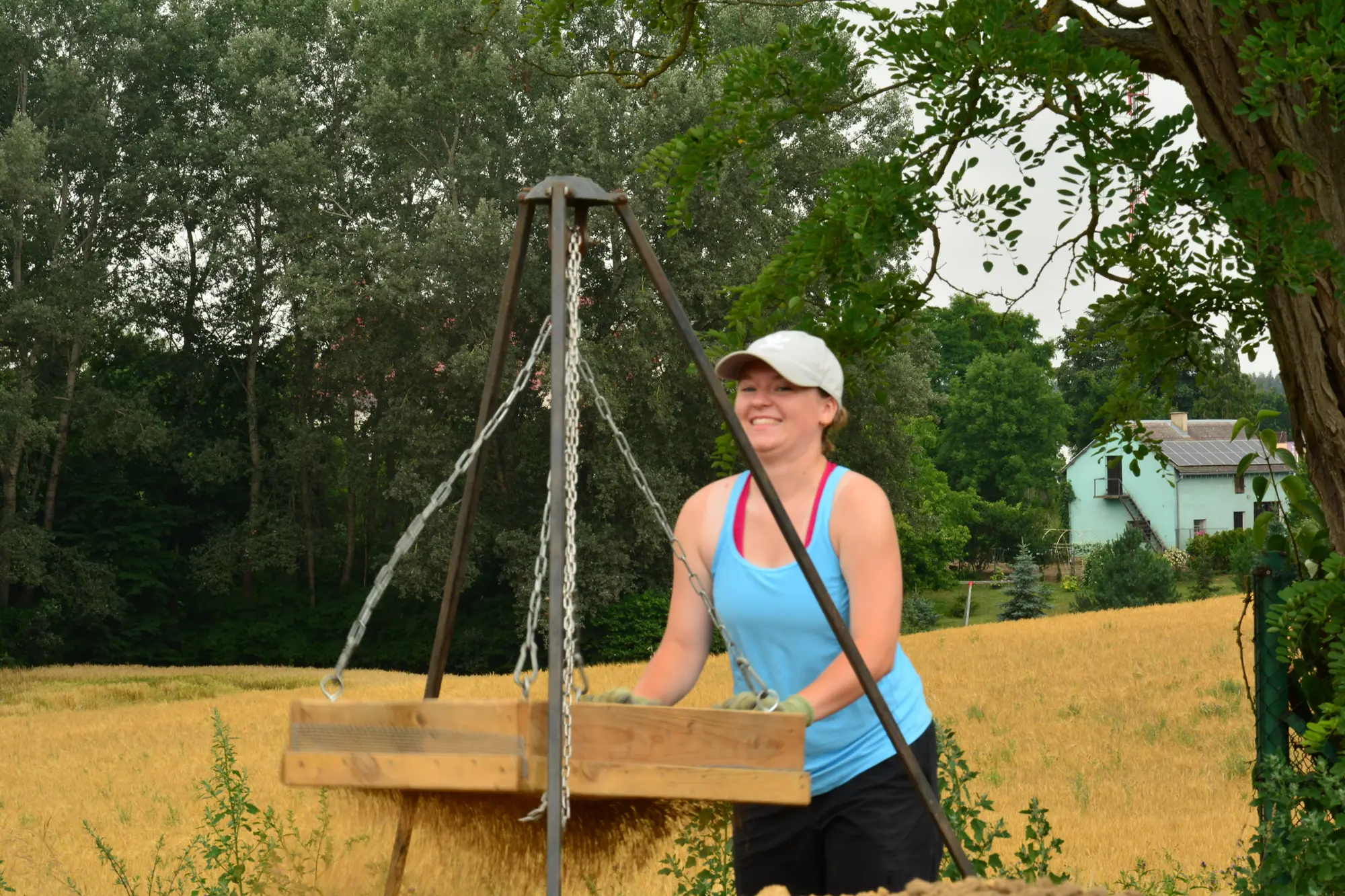
Field School students stay in a local school complex adapted to the needs of an archaeological expedition. The available buildings provide sleeping rooms, a kitchen, bathroom/showers & toilet facilities, laboratory/lecture room and a gym. Food (3 meals a day) is prepared according to traditional, local culinary recipes and delivered to the housing facilities. Vegetarians will be accommodated.
Jankowo Dolne is located in Wielkopolska (Greater Poland), some 60 km (37 miles) north east from the city of Poznań. The region preserves the flavour of ancient Poland with its rustic landscape, fields, forests and lakes abundant with wildlife. Your travel destination is Poznań. Although there are no direct overseas connections to Poznań, you can get there in a variety of ways. You can take a flight from many cities in the US and Canada to Warsaw or other destinations in Europe: Frankfurt, London, Berlin, Munich, Copenhagen all of which have connections to Poznań. You can fly to Berlin and take a train to Poznań. It is a 3 hour journey.
Pick-up and drop-off days
The Field School provides transportation from Poznań to Jankowo Dolne and back during the days of arrival and departure.
Session 1:
Monday, June 28 pick-up
Wednesday, July 21 drop-off
Session 2:
Thursday, July 22 pick-up
Saturday, August 14 drop-off